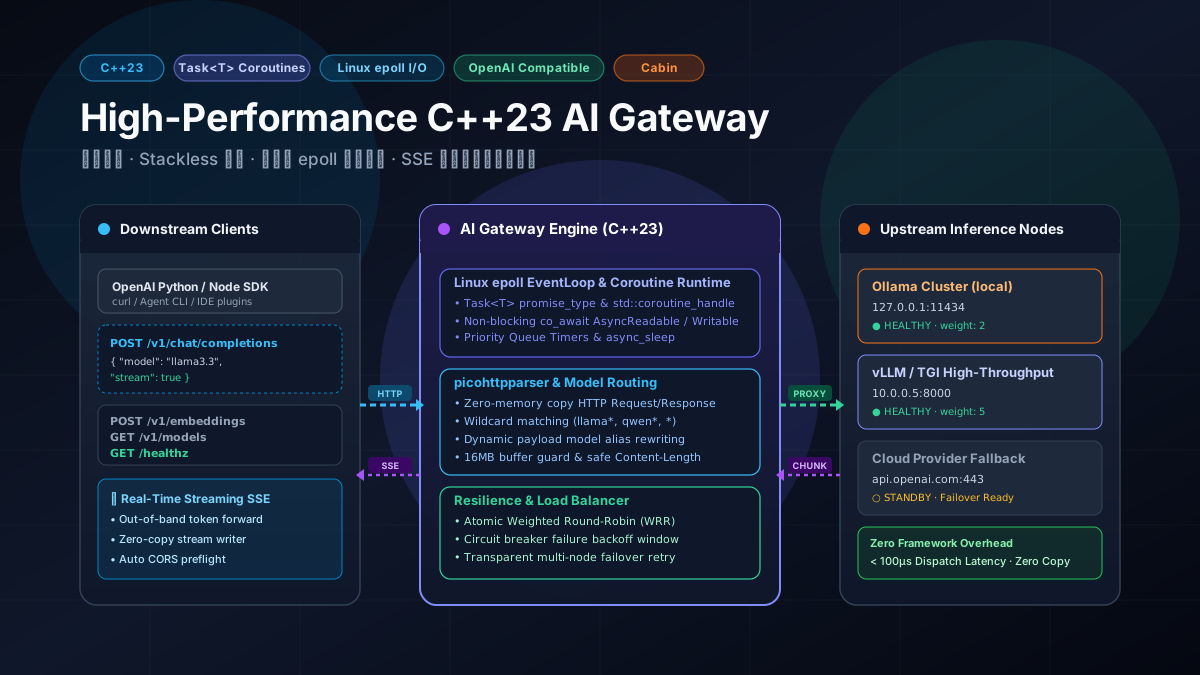
在當今生成式 AI 與 AI coding agent(例如 Claude Code、Aider 等 agent,或透過 OpenAI SDK / curl 等客戶端)蓬勃發展的時代,開發者與企業內部往往需要調度多個不同的模型後端——從本地執行的 Ollama、vLLM、TGI,到雲端 API。為了提供統一的存取介面、負載平衡、容錯重試以及模型名稱映射,AI Gateway(人工智慧閘道) 扮演著關鍵的中樞角色。
然而,市面上許多閘道方案往往依賴體積龐大的執行環境(如 Python 或 Node.js)或是封裝複雜的 heavy-weight 框架,不僅啟動與記憶體佔用可觀,在處理高並發 Server-Sent Events (SSE) 串流時也常帶來額外的延遲與 context switch 開銷。
這篇文章將完整分享我們最近開源的 C++23 AI Gateway 專案——一個基於 C++23 Stackless 協程、Linux epoll、零重型框架相依,並採用現代 C++ 套件管理器 Cabin 構建的極簡高效 OpenAI 相容閘道服務。
動機與設計哲學:為何選擇 C++23 與 Cabin?
在構想這個閘道時,我們設定了幾個核心設計目標:
- 輕量設計與零框架相依(Zero-Framework Overhead):不引入 Boost.Asio 等重量級網路庫,而是直接基於 Linux 原生
epoll與 non-blocking socket 打造專屬的非同步協程執行期(runtime),將二進位檔體積與執行期記憶體控制在數 MB 以內。 - 直觀清晰的協程代碼(Async/Await Syntax):透過 C++20/C++23 的
co_await與Task<T>,讓非同步 I/O 與網路串流轉發像同步程式碼一樣線性流暢,徹底告別傳統 callback hell。 - 充分利用 C++23 語言與標準庫新特性:廣泛使用
std::expected與 monadic 操作進行零成本錯誤處理、以std::string_view::contains簡化字串比對,並以std::unreachable()消除無效分支、輔助編譯器最佳化。 - 無縫相容 OpenAI API 生態:完整支援
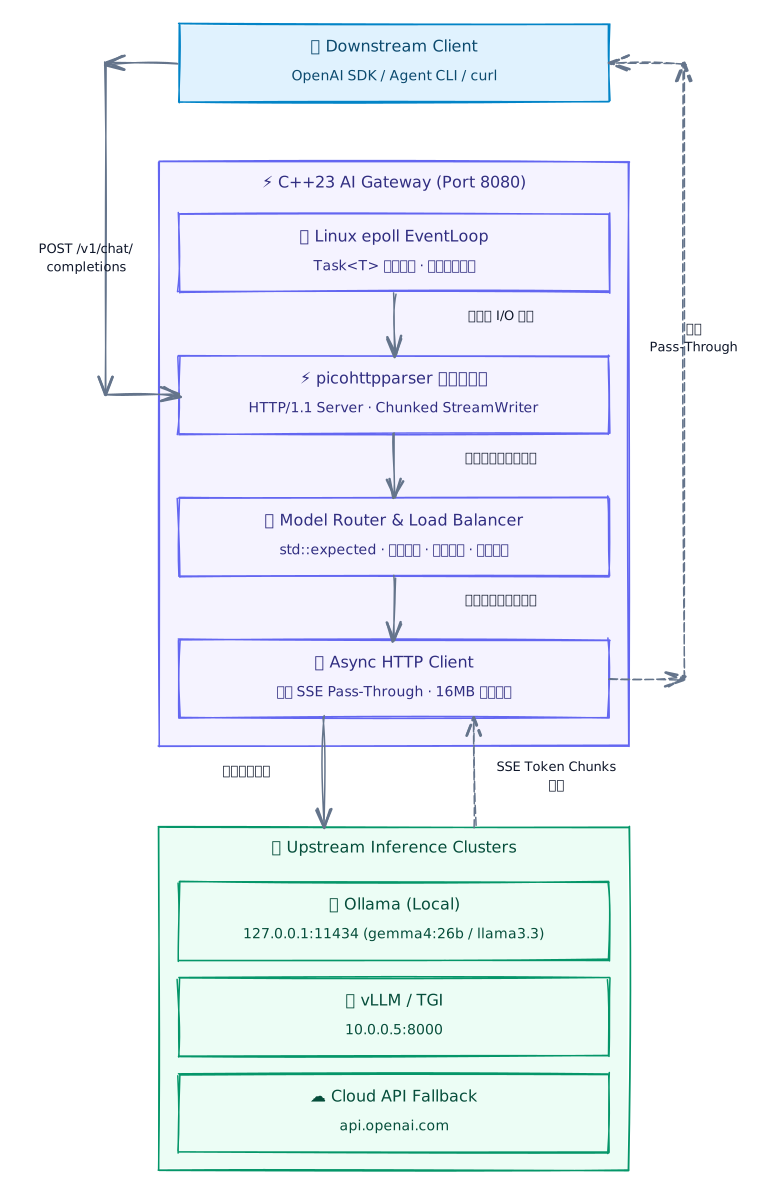
/v1/chat/completions、/v1/completions、/v1/embeddings、/v1/models與/healthz,無論是官方 OpenAI Python/Node SDK 或是curl都能直接隨插即用。 - 低延遲 SSE 串流 Pass-Through:針對大語言模型(LLM)的 token 串流輸出(
stream: true),實現零應用層堆積分配的即時 Pass-Through 轉發,並原生支援新一代推理模型(Reasoning Models)的思考鏈串流。 - 現代化建置體驗:使用如 Rust Cargo 般簡潔好用的 Cabin (
cabin.toml) 管理依賴(nlohmann_json、spdlog、picohttpparser、catch2),告別繁瑣的 CMake 配置地獄。
C++20/C++23 協程核心觀念深度剖析
C++ 協程是現代 C++ 中最強大但門檻也最高的語言特性之一。要寫出正確、高效且無記憶體洩漏的非同步 runtime,必須深刻理解其底層機制。
Stackless 協程與 Coroutine Frame
C++ 採用的是 Stackless (無堆疊) 協程,這與 Go 的 goroutine 或 Lua 協程 (Stackful) 有本質區別:
- Stackful 協程:每個協程擁有自己獨立預先分配的呼叫堆疊(例如 2KB–8KB),可以在任何深度的巢狀函式呼叫中暫停。但代價是較高的記憶體開銷與複雜的堆疊切換組合語言程式碼。
- Stackless 協程:協程本身被編譯器轉換為一個 狀態機 (State Machine)。協程的暫停點(
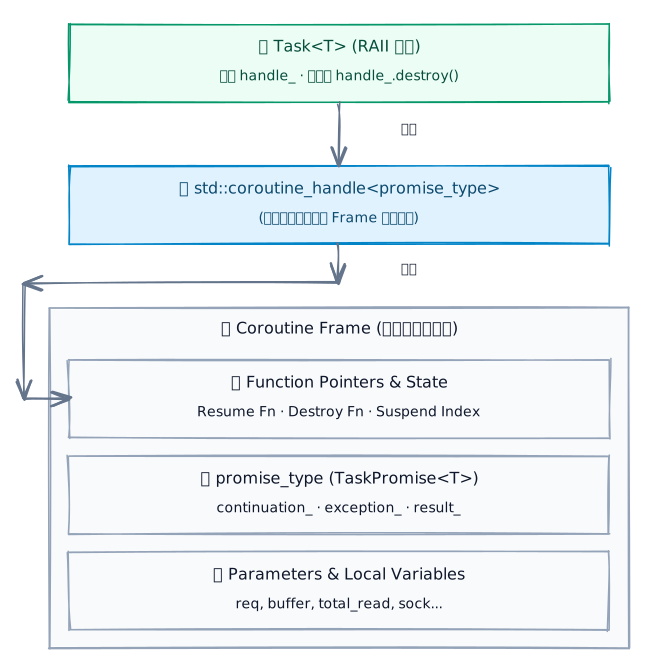
co_await、co_yield、co_return)必須位於協程函式本體之內(可位於巢狀的迴圈、條件分支與區塊中);若某個輔助函式需要暫停,它本身必須也是協程,無法跨越一般非協程函式呼叫邊界暫停。當協程暫停時,它的局部變數與執行狀態保存在堆積(heap)上分配的 Coroutine Frame (協程訊框) 中。
HALO 最佳化(Heap Allocation eLision Optimization)
雖然 Coroutine Frame 預設透過 operator new 在堆積上分配,但在編譯器最佳化(如 Clang 的 CoroElide Pass,需開啟 -O2/-O3 且協程與呼叫端可被內聯於同一編譯單元)下,若編譯器能證明協程的生命週期嚴格包含在呼叫者(caller)之內,就有機會觸發 HALO(堆積分配消除最佳化),直接將 Coroutine Frame 內聯到 caller 的堆疊上,達到零堆積分配開銷。需要注意的是,HALO 目前屬於編譯器的 best-effort 最佳化而非 C++ 標準保證(GCC 目前尚未實作 coroutine heap elision,業界亦正透過如 [[clang::coro_inplace_task]] 等屬性推動確定性 elision 提案)。
協程四大核心元件
C++ 協程基礎設施主要由以下四個元件相互協同運作:
promise_type:協程內部的狀態控制器與結果接收者。它決定協程啟動時是否立即暫停(initial_suspend)、結束時如何清理(final_suspend)、如何捕獲返回值(return_value/return_void)與處理未捕獲異常(unhandled_exception)。std::coroutine_handle<P>:一個輕量級、型別安全的裸指標,指向 Coroutine Frame。可用來執行resume()、destroy()、檢查done(),以及透過handle.promise()存取關聯的 promise 物件。- Coroutine Frame:編譯器在背後自動生成的資料結構,存放狀態機索引、函式參數、局部變數與 promise 實例。
- Awaiter(等待器):任何實作了 Awaiter 概念 的物件,包含三個核心函式:
bool await_ready():回傳true表示結果已備妥,不暫停直接繼續;回傳false則進入暫停流程。auto await_suspend(coroutine_handle<>):當協程準備暫停時被呼叫(僅在await_ready()回傳false時),可將當前 handle 註冊至 event loop 或傳遞給下一個排程者。decltype(auto) await_resume():當協程被喚醒時被呼叫,其回傳值即為co_await expr的運算式結果。
為何將 Return Object (Task<T>) 與 promise_type 解耦?
在設計非同步協程庫時,初學者常困惑:為什麼 Task<T> 不直接就是 promise_type,而要分開宣告?
將 Task<T> 與 promise_type 解耦是現代 C++ 協程架構的標準範式,背後有三大關鍵考量:
- RAII 資源生命週期管理:
promise_type存活於 Coroutine Frame 內部,它無法安全管理外部呼叫者的擁有權。Task<T>是一個 純移動 (move-only) 的外部 handle 物件。當Task<T>超出作用域或被解構時,它的解構子可以明確且安全地呼叫handle_.destroy()釋放 Coroutine Frame,防止懸空指標與記憶體洩漏。 - 公開 API 與內部狀態隔離:呼叫者只需要關心
co_await task、release()、valid()等公開介面,不需要看到內部的 continuation 鏈結指標(continuation_)、異常指標(exception_)或底層 variant 結果。 - 零拷貝傳值與單次消費意圖:透過將
operator co_await()限定為 rvalue 參照(operator co_await() &&)並刪除 lvalue 運算子,能強制要求co_await std::move(task),在語法層面明確表達單次消費語意,防止意外重複排程。
核心實作:Task<T> 與 from_promise(*this)
以下是我們專案中 include/aigw/coroutine/task.hpp 的精華實作(包含 Task<T> 與針對 Task<void> 的特化支援):
#pragma once
#include <coroutine>
#include <exception>
#include <stdexcept>
#include <utility>
#include <variant>

namespace aigw::coro {

template <typename T = void>
class [[nodiscard]] Task;

namespace detail {

struct TaskPromiseBase {
    std::coroutine_handle<> continuation_{nullptr};
    std::exception_ptr exception_{nullptr};

    struct FinalAwaiter {
        bool await_ready() const noexcept { return false; }

        template <typename PromiseType>
        std::coroutine_handle<> await_suspend(std::coroutine_handle<PromiseType> h) noexcept {
            // 當協程執行完畢,若有等待中的父協程,直接對稱轉移 (Symmetric Transfer) 喚醒父協程
            if (h.promise().continuation_) {
                return h.promise().continuation_;
            }
            return std::noop_coroutine();
        }

        void await_resume() noexcept {}
    };

    // Lazy 模式:建立協程時先暫停,直到被 co_await 時才開始執行
    std::suspend_always initial_suspend() noexcept { return {}; }
    FinalAwaiter final_suspend() noexcept { return {}; }
    void unhandled_exception() noexcept { exception_ = std::current_exception(); }
};

template <typename T>
struct TaskPromise : TaskPromiseBase {
    std::variant<std::monostate, T> result_;

    Task<T> get_return_object() noexcept;

    template <typename U>
        requires std::convertible_to<U, T>
    void return_value(U&& value) {
        result_.template emplace<T>(std::forward<U>(value));
    }

    T& result() {
        if (exception_) {
            std::rethrow_exception(exception_);
        }
        return std::get<T>(result_);
    }
};

// Task<void> 特化:無需儲存回傳值,提供 return_void()
template <>
struct TaskPromise<void> : TaskPromiseBase {
    Task<void> get_return_object() noexcept;
    void return_void() noexcept {}
    void result() {
        if (exception_) {
            std::rethrow_exception(exception_);
        }
    }
};

} // namespace detail

template <typename T>
class [[nodiscard]] Task {
public:
    using promise_type = detail::TaskPromise<T>;
    using handle_type = std::coroutine_handle<promise_type>;

    Task() noexcept : handle_(nullptr) {}
    explicit Task(handle_type handle) noexcept : handle_(handle) {}

    // Move-only 語意,嚴禁拷貝
    Task(const Task&) = delete;
    Task& operator=(const Task&) = delete;

    Task(Task&& other) noexcept : handle_(std::exchange(other.handle_, nullptr)) {}
    Task& operator=(Task&& other) noexcept {
        if (this != &other) {
            if (handle_) handle_.destroy();
            handle_ = std::exchange(other.handle_, nullptr);
        }
        return *this;
    }

    ~Task() {
        if (handle_) {
            handle_.destroy();
        }
    }

    struct Awaiter {
        handle_type handle_;

        bool await_ready() const noexcept {
            return !handle_ || handle_.done();
        }

        std::coroutine_handle<> await_suspend(std::coroutine_handle<> awaiting_coroutine) noexcept {
            // 將等待者 (caller) 的 handle 記錄進 promise,以便執行完畢時回調
            handle_.promise().continuation_ = awaiting_coroutine;
            return handle_; // 對稱轉移執行子協程
        }

        decltype(auto) await_resume() {
            if (!handle_) {
                throw std::runtime_error("Attempted to await invalid coroutine task");
            }
            return handle_.promise().result();
        }
    };

    auto operator co_await() const & = delete;
    auto operator co_await() && noexcept {
        return Awaiter{handle_};
    }

    handle_type release() noexcept { return std::exchange(handle_, nullptr); }

private:
    handle_type handle_;
};

namespace detail {
// 透過 std::coroutine_handle::from_promise(*this) 將 promise 反向轉換為型別安全的 handle
template <typename T>
Task<T> TaskPromise<T>::get_return_object() noexcept {
    return Task<T>{std::coroutine_handle<TaskPromise<T>>::from_promise(*this)};
}

inline Task<void> TaskPromise<void>::get_return_object() noexcept {
    return Task<void>{std::coroutine_handle<TaskPromise<void>>::from_promise(*this)};
}
} // namespace detail

} // namespace aigw::coro
當一個協程函式被呼叫時:
- 編譯器在堆積上分配 Coroutine Frame,並構造
TaskPromise<T>。 - 呼叫
promise.get_return_object(),內部利用std::coroutine_handle<TaskPromise<T>>::from_promise(*this)取得指向當前 Frame 的 handle,封裝成Task<T>並立即回傳給呼叫端。 - 由於
initial_suspend()回傳std::suspend_always,協程會先停在起始處,直到呼叫端執行co_await task時才啟動執行。
實戰透視:透過 GDB 追蹤協程完整生命週期與呼叫堆疊(Call Stack)
在傳統同步程式碼中,函式的調用與返回完全遵循 CPU 堆疊指標(Stack Pointer, ESP/RSP)的線性 push/pop。然而,在 C++20/23 無堆疊協程中,協程的暫停與恢復本質上是堆積狀態機(Heap-allocated State Machine)的切換。當我們在 GDB 等除錯器中觀察時,會看到非常不同於傳統函式的符號與呼叫堆疊結構。
編譯器符號拆解:Ramp Function vs. Actor Clone
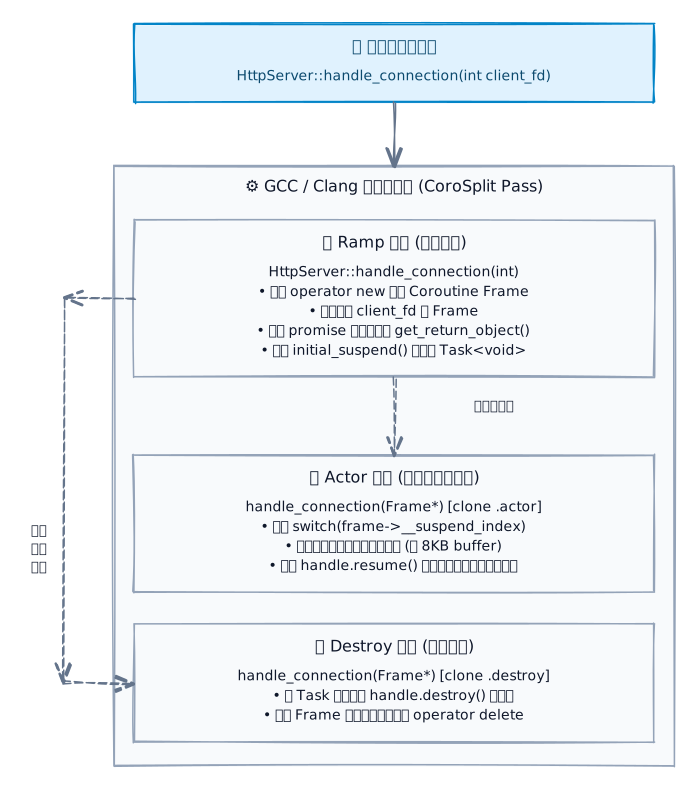
當 GCC 或 Clang 編譯包含 co_await、co_yield 或 co_return 的協程函式(例如 HttpServer::handle_connection(int))時,編譯器前端(CoroSplit Pass)會將該函式裂解為數個不同的實體符號:
- Ramp 函數(
handle_connection(int)):對外保留原始函式簽名。呼叫端呼叫此函式時,它只負責在 Heap 上分配 Coroutine Frame、初始化 Promise、調用initial_suspend(),並回傳Task<void>外部控制物件。 - Actor 函數(
handle_connection [clone .actor]):真正的狀態機本體,引數為指向 Coroutine Frame 的內部指標。內部維護暫停點索引(Suspend Index),每次handle.resume()被呼叫時,便透過此函式直接跳轉至上次中斷點。 - Destroy 函數(
handle_connection [clone .destroy]):當協程未執行完畢即被解構(例如Task<T>超出作用域觸發handle_.destroy())時,負責釋放 Frame 內資源與記憶體。
GDB 自動化無感除錯技巧(Non-intrusive Tracing)
非同步伺服器(如 AI Gateway)高度依賴 Linux Non-blocking socket 與 epoll 事件循環。若使用傳統互動式 GDB 在中斷點停住手動輸入命令,往往會導致客戶端 TCP 連線逾時(Timeout)、epoll 逾時觸發或連線被重設。
為了解決這個問題,我們可以撰寫一個自動化的 GDB 腳本(trace_coro.gdb),利用 commands 指令搭配 continue 與 batch 模式,在不阻塞網路連線與事件循環的前提下,全速即時抓取所有關鍵階段的 Call Stack:
# trace_coro.gdb
set pagination off
set print thread-events off

# 1. 捕捉 Ramp 函數調用 (Frame 建立階段)
break aigw::http::HttpServer::handle_connection(int)
commands 1
  silent
  printf "\n=======================================================\n"
  printf " [STAGE 1] Ramp Function Called -> Allocate Frame & Task\n"
  printf "=======================================================\n"
  backtrace 4
  continue
end

# 2. 捕捉 Actor 狀態機恢復 (Initial Resume 與後續 I/O 喚醒)
break aigw::http::HttpServer::handle_connection [clone .actor]
commands 2
  silent
  printf "\n=======================================================\n"
  printf " [STAGE 2 / 4] Actor Resume -> Inside State Machine\n"
  printf "=======================================================\n"
  backtrace 4
  continue
end

# 3. 捕捉 Awaiter 暫停與 epoll 註冊
break aigw::coro::EventLoop::register_read
commands 3
  silent
  printf "\n=======================================================\n"
  printf " [STAGE 3] Suspend Point -> Register epoll EPOLLIN\n"
  printf "=======================================================\n"
  backtrace 4
  continue
end

# 4. 捕捉下游業務邏輯與對稱轉移回應
break aigw::http::StreamWriter::write_raw
commands 4
  silent
  printf "\n=======================================================\n"
  printf " [STAGE 5] Symmetric Transfer -> Handler Response Write\n"
  printf "=======================================================\n"
  backtrace 5
  continue
end

run
透過指令批次啟動追蹤:
gdb -batch -x trace_coro.gdb --args ./build/dev/packages/ai-gateway/ai-gateway在另一個終端機使用 curl http://localhost:8080/healthz 發送請求,GDB 即可精確無漏地印出協程完整生命週期的堆疊演變!
實測各階段完整 Call Stack 堆疊剖析
以下是搭配 AI Gateway 真實執行環境所擷取的關鍵階段 Call Stack 與底層運作剖析:
Ramp 呼叫與 Frame 配置(TCP Accept ➜ Spawn)
當 Linux 核心通知有新連線抵達,HttpServer::start 的 while 迴圈呼叫 srv->handle_connection(client_fd):
#0  aigw::http::HttpServer::handle_connection(this=0x7fffffffdfa0, client_fd=5) at src/http/server.cc:79
#1  0x00005555555627ab in aigw::http::HttpServer::start(this=0x7fffffffdfa0, loop=...)::<lambda()>::operator() at src/http/server.cc:229
#2  0x0000555555562a14 in aigw::http::HttpServer::start(this=0x7fffffffdfa0, loop=...) at src/http/server.cc:234
#3  0x0000555555559f20 in aigw::GatewayService::start(this=0x7fffffffdf50, loop=...) at src/gateway.cc:27
#4 0x0000555555559132 in main() at src/main.cc:88- 底層運作:此時進入的是 Ramp 函數。編譯器在 Heap 上調用
operator new分配Coroutine Frame,將參數client_fd=5存入 Frame,並構造TaskPromise<void>。隨後呼叫initial_suspend(),由於回傳std::suspend_always,協程在此刻處於初始暫停態。Ramp 函數立即回傳Task<void>物件,由呼叫端透過loop.spawn(task.release())將其底層coroutine_handle放進 EventLoop 的ready_queue_。
首次恢復(Initial Resume ➜ 進入 Actor 狀態機)
主迴圈 EventLoop::run() 啟動,從 ready_queue_ 提取剛剛放入的 handle 並調用 h.resume():
#0  aigw::http::HttpServer::handle_connection(int) [clone .actor](_coro_frame_ptr=0x555555593820) at src/http/server.cc:79
#1  0x000055555555d4c1 in std::coroutine_handle<void>::resume(this=0x7fffffffdc40) at /usr/include/c++/13/coroutine:137
#2  0x0000555555560189 in aigw::coro::EventLoop::run(this=0x7fffffffdf00) at src/coroutine/event_loop.cc:112
#3 0x0000555555559145 in main() at src/main.cc:90- 底層運作:堆疊頂端此時已不再是普通的
handle_connection,而是編譯器生成的狀態機符號[clone .actor],並傳入了 Frame 的指標(0x555555593820)。協程程式碼正式開始執行,於 Frame 內部構造局部變數std::vector<char> buffer(8192),並進入外層 HTTP 連線循環。
暫停點:co_await async_read 讓出執行緒
協程執行至 co_await coro::async_read(client_fd, ...),發現 socket 尚未有資料可讀,觸發 Awaiter 暫停流程:
#0  aigw::coro::EventLoop::register_read(this=0x7fffffffdf00, fd=5, handle=...) at src/coroutine/event_loop.cc:78
#1  0x0000555555561a32 in aigw::coro::AsyncReadable::await_suspend(this=0x7fffffffd9a0, handle=...) at include/aigw/coroutine/io_awaiter.hpp:24
#2  0x0000555555563102 in aigw::http::HttpServer::handle_connection(int) [clone .actor](_coro_frame_ptr=0x555555593820) at src/http/server.cc:146
#3  0x000055555555d4c1 in std::coroutine_handle<void>::resume(this=0x7fffffffdc40) at /usr/include/c++/13/coroutine:137
#4 0x0000555555560189 in aigw::coro::EventLoop::run(this=0x7fffffffdf00) at src/coroutine/event_loop.cc:112- 底層運作:
AsyncReadable::await_suspend將當前協程的handle與fd=5註冊至 Linuxepoll(EPOLLIN事件),並回傳noop_coroutine()。協程內部狀態與已讀取長度(total_read=0)完整保留在 Frame 中,整個呼叫堆疊向外回退(unwind)至EventLoop::run(),進入epoll_wait阻塞等待網路事件,完全不佔用任何 CPU。
恢復點:I/O 就緒與精確復甦
當客戶端執行 curl 送出 HTTP Request 封包,Linux 核心喚醒 epoll_wait,EventLoop 取得關聯的 handle 並呼叫 h.resume():
#0  aigw::http::HttpServer::handle_connection(int) [clone .actor](_coro_frame_ptr=0x555555593820) at src/http/server.cc:150
#1  0x000055555555d4c1 in std::coroutine_handle<void>::resume(this=0x7fffffffdc40) at /usr/include/c++/13/coroutine:137
#2  0x0000555555560241 in aigw::coro::EventLoop::run(this=0x7fffffffdf00) at src/coroutine/event_loop.cc:135
#3 0x0000555555559145 in main() at src/main.cc:90- 底層運作:
EventLoop::run再次呼叫h.resume(),執行權 $O(1)$ 精確直達中斷點server.cc:150(total_read += static_cast<size_t>(n);)。協程從 non-blocking socket 中一口氣讀入 84 bytes 的請求資料,並調用HttpParser::parse_request零拷貝解析 HTTP 標頭,成功匹配到GET /healthz。
對稱轉移(Symmetric Transfer)與回應下發
解析完成後,協程調用 co_await handler_(req, writer),進入下游業務邏輯:
#0  aigw::http::StreamWriter::write_raw(this=0x7fffffffd810, data="HTTP/1.1 200 OK\r\n...") at src/http/server.cc:54
#1  0x000055555555b204 in aigw::GatewayService::handle_healthz(this=0x7fffffffdf50, req=..., writer=...) [clone .actor] at src/gateway.cc:89
#2  0x000055555555af10 in aigw::GatewayService::handle_request(this=0x7fffffffdf50, req=..., writer=...) [clone .actor] at src/gateway.cc:55
#3  0x0000555555563588 in aigw::http::HttpServer::handle_connection(int) [clone .actor](_coro_frame_ptr=0x555555593820) at src/http/server.cc:163
#4  0x000055555555d4c1 in std::coroutine_handle<void>::resume(this=0x7fffffffdc40) at /usr/include/c++/13/coroutine:137
#5 0x0000555555560241 in aigw::coro::EventLoop::run(this=0x7fffffffdf00) at src/coroutine/event_loop.cc:135- 底層運作:
handle_connection透過co_await喚醒GatewayService::handle_request,並將自身 handle 設為continuation_。- 請求被分派至
handle_healthz,建構 JSON 回應並呼叫writer.write_raw()。 write_raw內部發起co_await coro::async_write將 HTTP 回應寫入客戶端 socket。- 當回應寫入完畢、子協程執行至
final_suspend()時,透過 Symmetric Transfer(對稱轉移) 尾跳躍直接切換回handle_connection,完全無需經過額外的堆疊累積或繁瑣的 EventLoop 重排程。
Compiler Explorer (Godbolt) 互動式彙編與狀態機分析
為了讓讀者能夠更直觀地親手驗證與探索編譯器對 C++23 協程的底層 lowering 細節,我們在 Compiler Explorer 上搭建了一個精簡可獨立編譯的互動式分析環境:
👉 Compiler Explorer 互動分析環境:https://godbolt.org/z/fd4azqMvj
在該環境中,你可以即時切換與對比主流編譯器的後端代碼生成:
- GCC 14.1:清楚觀察編譯器將協程函式拆解為 Ramp 函數、
[clone .actor]狀態機跳轉函式與[clone .destroy]記憶體清理函式。 - Clang 19.1:觀察 LLVM 的
coro.split與CoroElidepass 如何處理 Coroutine Frame 配置與狀態切換。 - 對稱轉移尾呼叫(Tail Call Optimization):驗證
await_suspend回傳std::coroutine_handle<>時,編譯器如何生成一條無額外堆疊開銷的jmp指令(Tail Jump),將控制權直接交給下一個協程。 - Coroutine Frame 佈局:檢視 Frame 中函式指標、Promise 物件、跨暫停點局部變數與 Suspend Index 的記憶體排布。
AI Gateway 架構設計與 C++23 現代化實作
有了堅固的協程基礎,接下來我們看看 AI Gateway 如何構建高性能的 HTTP 轉發服務,並深度結合 C++23 的語言特性。
自行實作 Linux epoll EventLoop 與非同步 Awaiter
我們在 include/aigw/coroutine/event_loop.hpp 中實作了單執行緒非阻塞的 EventLoop,結合 Linux epoll 與 eventfd 喚醒機制,並維護一個以 std::priority_queue 搭配自訂比較器(std::greater)實作的最小堆定時器佇列:
struct AsyncReadable {
    int fd;
    EventLoop* loop{nullptr};

    bool await_ready() const noexcept { return false; }
    void await_suspend(std::coroutine_handle<> handle) {
        if (!loop) loop = EventLoop::current();
        if (loop) {
            loop->register_read(fd, handle);
        } else {
            throw std::runtime_error("AsyncReadable awaited outside EventLoop thread");
        }
    }
    void await_resume() const noexcept {}
};
當呼叫 async_read 時,若 read() 回傳 EAGAIN 或 EWOULDBLOCK,協程會透過 co_await AsyncReadable{fd} 自動將自身暫停並向 epoll 註冊 EPOLLIN 事件;當核心通知 socket 可讀時,EventLoop 便立即將協程 handle 推入 ready_queue_ 恢復執行,全程零 CPU 忙碌等待(busy-waiting)。
picohttpparser 零記憶體拷貝 HTTP 解析
為了達到最高的解析速度,我們採用了知名且極簡的 C 語言 HTTP 解析函式庫 picohttpparser。
在解析 HTTP Header 時,picohttpparser 直接回傳指向輸入緩衝區的指標與長度,不產生任何不必要的 std::string 堆積分配:
ParseResult HttpParser::parse_request(
    const char* buf, size_t len, size_t last_len,
    HttpRequest& out_req, size_t& header_len) {

    const char* method;
    size_t method_len;
    const char* path;
    size_t path_len;
    int minor_version;
    struct phr_header headers[MAX_HEADERS];
    size_t num_headers = MAX_HEADERS;

    int pret = phr_parse_request(
        buf, len,
        &method, &method_len,
        &path, &path_len,
        &minor_version,
        headers, &num_headers,
        last_len
    );

    if (pret > 0) {
        header_len = static_cast<size_t>(pret);
        out_req.method = from_string_view(std::string_view(method, method_len));
        // ... 解析路徑、Query String 與 Headers
        return ParseResult::Complete;
    } else if (pret == -1) {
        return ParseResult::Error;
    }
    return ParseResult::Incomplete;
}
即時 SSE (Server-Sent Events) Pass-Through 串流
在 LLM 對話生成場景中,若等所有 token 生成完畢再打包回傳,首字延遲(Time to First Token, TTFT)會非常糟糕。
我們在 HttpClient::stream_request 中設計了雙重回調機制:
on_header:一旦上游回傳 HTTP 200 與Content-Type: text/event-stream,立即向用戶端下發 SSE 回應標頭(Transfer-Encoding: chunked、Cache-Control: no-cache)。on_chunk:後續async_read讀到的每一個原始 chunk,直接透過協程管道寫入客戶端 socket。
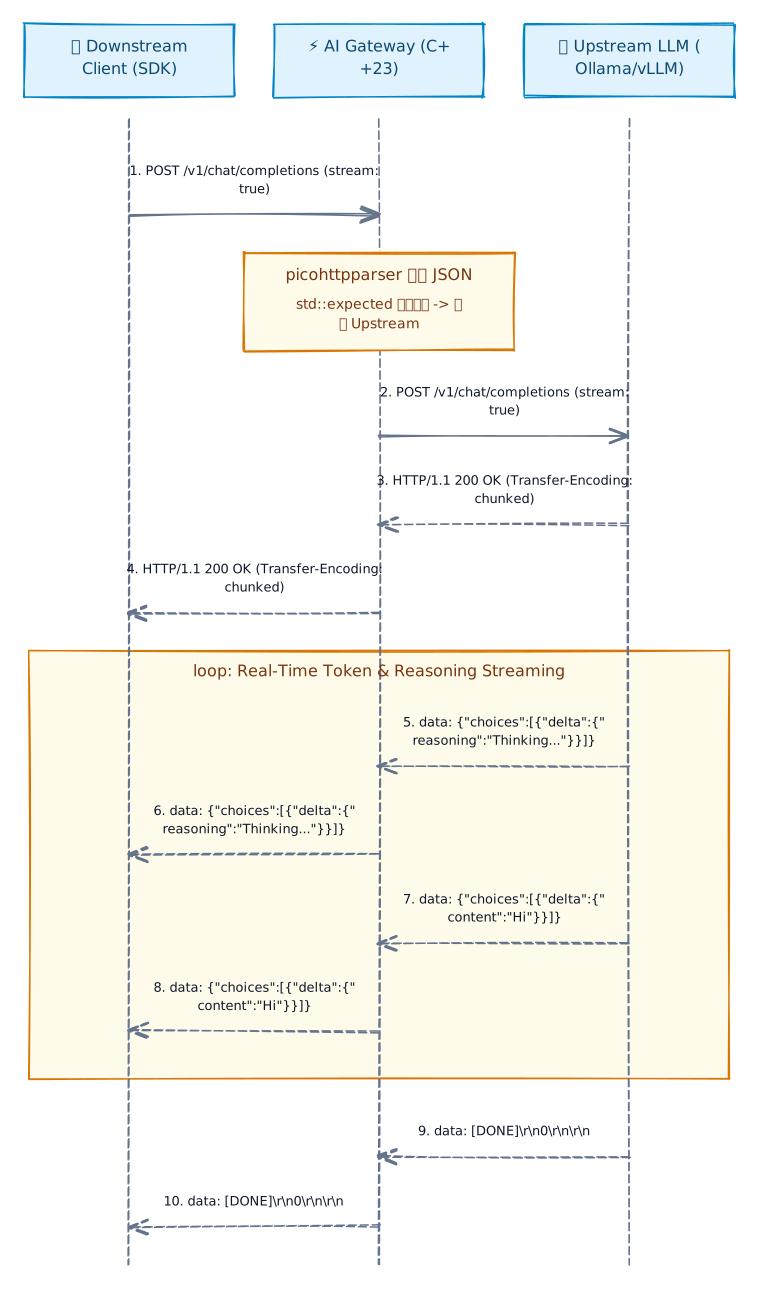
C++23 型別安全路由:std::expected、Monadic 操作與 std::unreachable
在舊式設計中,函式失敗往往透過回傳 std::optional 或拋出 C++ 例外來處理。然而 std::optional 缺乏具體的錯誤原因,而 C++ 例外則伴隨著顯著的 stack unwinding 執行期開銷。
在 C++23 中,我們全面改用 std::expected<RouteDecision, RoutingError> 進行路由解析:
enum class RoutingError {
    NoMatchingRoute,
    PoolNotFound,
    PoolEmpty
};

inline std::string to_string(RoutingError err) {
    switch (err) {
        case RoutingError::NoMatchingRoute: return "No route matched for requested model";
        case RoutingError::PoolNotFound: return "Target upstream pool not found in configuration";
        case RoutingError::PoolEmpty: return "Upstream pool has no configured target nodes";
    }
    std::unreachable(); // C++23: 告知編譯器此路徑不可能發生,消除無效 jump branch
}

std::expected<RouteDecision, RoutingError> ModelRouter::route(const std::string& requested_model) const {
    for (const auto& r : config_.routes) {
        if (match_pattern(r.model_pattern, requested_model)) {
            auto it = pools_.find(r.pool);
            if (it != pools_.end()) {
                if (it->second->nodes().empty()) {
                    return std::unexpected(RoutingError::PoolEmpty);
                }
                RouteDecision decision;
                decision.pool = it->second;
                decision.original_model = requested_model;
                decision.model = r.rewrite_model.empty() ? requested_model : r.rewrite_model;
                return decision;
            } else {
                return std::unexpected(RoutingError::PoolNotFound);
            }
        }
    }

    if (default_pool_) {
        if (default_pool_->nodes().empty()) {
            return std::unexpected(RoutingError::PoolEmpty);
        }
        RouteDecision decision;
        decision.pool = default_pool_;
        decision.original_model = requested_model;
        decision.model = requested_model;
        return decision;
    }

    return std::unexpected(RoutingError::NoMatchingRoute);
}
這項 C++23 升級帶來了幾大核心優勢:
- 富型別錯誤狀態(Rich Typed Errors):閘道層可根據
RoutingError精確映射 HTTP 狀態碼(例如NoMatchingRoute映射為 404 Not Found,而PoolNotFound/PoolEmpty映射為 500 Internal Error),且全程零例外開銷。 - C++23 Monadic 鏈式操作:支援使用
.transform()與.and_then()進行優雅的函數式鏈結:// 優雅提取 Pool 名稱,無需多層巢狀 if-else auto pool_name = router.route("llama3.3").transform([](const RouteDecision& d) { return d.pool->name(); }); - C++23
std::string_view::contains:告別冗長易錯的str.find("chunked") != std::string_view::npos,改用簡潔直觀的te->contains("chunked")與ct->contains("text/event-stream")。 std::unreachable()消除死代碼:在列舉(enum)的switch中使用std::unreachable(),能精確告知編譯器所有有效列舉值已被完全覆蓋,徹底消除「control reaches end of non-void function」警告並產生更緊湊的 jump table 組合語言。
加權輪詢(Weighted Round-Robin)與透明容錯重試
每個 Upstream Pool 支援配置多個節點,並可設定各自的權重(weight)、最大失敗次數(max_fails)與失敗冷卻時間(fail_timeout_sec)。
std::shared_ptr<UpstreamNode> UpstreamPool::select_node() {
    auto candidates = get_healthy_candidates();
    if (candidates.empty()) return nullptr;

    int total_weight = 0;
    for (const auto& node : candidates) {
        total_weight += std::max(1, node->weight());
    }

    size_t idx = rr_index_.fetch_add(1, std::memory_order_relaxed) % static_cast<size_t>(total_weight);
    int cumulative = 0;
    for (const auto& node : candidates) {
        cumulative += std::max(1, node->weight());
        if (idx < static_cast<size_t>(cumulative)) {
            return node;
        }
    }
    return candidates.front();
}
當某個節點連線逾時或回傳 5xx 錯誤時,閘道會自動將該節點標記為失敗,並在 max_retries 上限內自動挑選下一個健康的節點重試(重試機制適用於尚未開始向下游下發 SSE 標頭與串流 chunk 的初始階段),對下游客戶端完全透明無感。
現代化 Cabin 構建與 Catch2 測試
專案使用 Cabin 管理,宣告檔 cabin.toml 極其簡潔:
[package]
name = "ai-gateway"
version = "0.1.0"
cxx-standard = "c++23"

[dependencies]
nlohmann_json = { port = true, version = "^3.12.0" }
picohttpparser = { port = true, version = "^2026.4.6" }
spdlog = { port = true, version = "^1.17.0" }

[dev-dependencies]
catch2 = { port = true, version = "^3.15.1" }
只要執行 cabin build 與 cabin test,就能自動抓取依賴、編譯並運行包含 EventLoop、協程異常傳遞、定時器、HTTP Parser、C++23 std::expected 路由與加權負載平衡的完整單元測試(70 個斷言全部通過)。
代碼審查與強固化實戰(Hardening)
在初步完成功能開發後,我們進行了一輪全面的代碼審查(Code Review),針對安全性、邊界情況與潛在漏洞進行了深度的強固化改善:
使用 nlohmann::json 避免錯誤訊息 JSON Injection
隱患:原先 HttpResponse::make_error 採用字串拼接方式建構 JSON:
// ❌ 危險:若 message 包含引號、反斜線或控制字元,將造成 JSON 語法損壞
std::string json = "{\"error\":{\"message\":\"" + message + "\",...}}";
當上游回傳異常的 HTML 或非預期格式時,客戶端解析 JSON 將直接崩潰。
修復:全面改用 nlohmann::json 安全序列化,自動處理字元跳脫:
// ✅ 安全:自動正確跳脫所有特殊字元
nlohmann::json j;
j["error"]["message"] = message;
j["error"]["type"] = type;
j["error"]["code"] = "invalid_request_error";
return make_json(status, j.dump());
Async-Signal-Safe 信號處理與忽略 SIGPIPE
隱患 1:在 UNIX signal handler 中呼叫 spdlog::info 或進行堆積記憶體分配是非 async-signal-safe 的行為,可能在特定情況下導致 deadlock。
修復 1:改用 volatile sig_atomic_t 旗標與 eventfd 進行非同步安全通知:
volatile sig_atomic_t g_shutdown_requested = 0;

void signal_handler(int sig) {
    (void)sig;
    g_shutdown_requested = 1;
    if (g_wakeup_fd >= 0) {
        uint64_t val = 1;
        ::write(g_wakeup_fd, &val, sizeof(val)); // async-signal-safe
    }
}
隱患 2:在 SSE 串流過程中,若客戶端中途關閉連線,伺服器繼續 write() 到已關閉的 socket 會觸發 SIGPIPE 信號,預設情況下會直接 終止整個行程!
修復 2:在程式啟動時明確忽略 SIGPIPE:
std::signal(SIGPIPE, SIG_IGN);async_connect 逾時支援與定時器取消
隱患:原先 async_connect 雖然宣告了 timeout 參數,但在 AsyncWritable 上並未真正關聯定時器。若目標伺服器 SYN-ACK 遺失或被防火牆丟棄,協程將永久掛起。
修復:實作專屬的 AsyncConnectAwaiter,在暫停時註冊定時器,在連線成功恢復時立即取消定時器(cancel_timer),並透過 getsockopt(SOL_SOCKET, SO_ERROR) 嚴格校驗連線狀態。
16MB 緩衝區上限防禦與 Content-Length 安全解析
隱患:當面對惡意請求或異常的大型回應時,若緩衝區無限 resize(*2),可能導致伺服器 OOM。此外,若 Content-Length 包含負數或尾隨無效字元,解析不嚴格可能造成非預期行為。
修復:
- 限制客戶端與伺服端緩衝區最大上限為
16MB(MAX_CLIENT_BUFFER)。 - 使用
std::from_chars(或std::stoull嚴格校驗非負數與尾隨字元完整性)安全解析Content-Length,遇到非法數值或超出上限時立即中斷連線並回傳 400/502 錯誤。
SSE 串流 Chunked 編碼與客戶端掛起修復(Transfer-Encoding: chunked)
隱患:在整合 OpenAI Python SDK(底層基於 httpx)測試即時串流時,我們發現連線雖然能正常接收所有 token,但在串流結束時 Python client 會 陷入無限等待(hang),直到連線逾時中斷。
原因剖析:
- 上游推論後端(如 Ollama)是以 HTTP/1.1 Chunked Transfer Encoding 回傳 SSE 串流資料,每個資料區塊由長度標頭與內容組成,並以長度為 0 的終止區塊(
0\r\n\r\n)標記傳輸結束。 - 由於我們的閘道採用零拷貝的 raw chunk 直接轉發,若在轉發 downstream HTTP Header 時將
Transfer-Encoding: chunked標頭過濾或遺漏,客戶端的 HTTP 解碼器(httpx)便無法得知這是 chunked 資料流。 - 結果
httpx會將其當作一般 stream,不會去解析0\r\n\r\n結束符號,而是一直傻傻等待 TCP socket 關閉(FIN)。但由於 Keep-Alive 長連線保持開啟,客戶端便發生無限 hang 的現象!
修復:在轉發 SSE 回應標頭時,明確保留並設定 Transfer-Encoding: chunked:
if (s_hdr.is_chunked) {
    resp_headers.set("Transfer-Encoding", "chunked");
}
resp_headers.set("Content-Type", "text/event-stream");
resp_headers.set("Cache-Control", "no-cache");
resp_headers.set("Connection", "keep-alive");
當 Transfer-Encoding: chunked 正確送達客戶端後,httpx 的 chunked decoder 在收到 0\r\n\r\n 時便會立即乾淨俐落地觸發串流結束事件,徹底解決掛起問題。
快速上手與本地推論實機驗證
啟動與測試
透過 Cabin 編譯與啟動服務:
# 編譯專案
cabin build

# 執行單元測試
cabin test

# 啟動閘道服務
cabin run -- --port 8080 --log-level debug --config config.json
設定檔 config.json 範例:
{
  "host": "0.0.0.0",
  "port": 8080,
  "log_level": "info",
  "default_pool": "local_ollama",
  "pools": [
    {
      "name": "local_ollama",
      "timeout_ms": 60000,
      "max_retries": 2,
      "targets": [
        { "host": "127.0.0.1", "port": 11434, "weight": 1 }
      ]
    }
  ],
  "routes": [
    {
      "model": "gemma*",
      "pool": "local_ollama"
    },
    {
      "model": "llama*",
      "pool": "local_ollama"
    }
  ]
}
與 OpenAI Python SDK 整合:本地 Ollama、gemma4:26b 與思考過程串流
我們使用本地啟動的 Ollama 載入具備強大推理能力(Reasoning / Thinking)的開源模型 gemma4:26b。新一代推理模型在輸出最終答案前,會先串流輸出內部的思考鏈過程(透過 delta.reasoning 或 delta.reasoning_content 傳遞)。
我們撰寫了一段 Python 測試腳本 scripts/openai-client.py,展示如何透過閘道即時呈現思考過程與最終回答:
from openai import OpenAI
import sys

# 將 base_url 指向本機 C++23 AI Gateway
client = OpenAI(
    base_url="http://localhost:8080/v1",
    api_key="none"
)

# 測試即時串流對話 (使用具備 Reasoning 能力的 gemma4:26b)
response = client.chat.completions.create(
    model="gemma4:26b",
    messages=[{"role": "user", "content": "請用繁體中文以兩句話解釋 C++20 協程。"}],
    stream=True
)

in_thinking = False

for chunk in response:
    if not chunk.choices:
        continue
    delta = chunk.choices[0].delta

    # 處理思考/推理輸出 (Thinking / Reasoning tokens)
    reasoning = getattr(delta, "reasoning", None) or getattr(delta, "reasoning_content", None)
    if reasoning:
        if not in_thinking:
            print("\033[90m[思考中...]\033[0m ", end="", flush=True)
            in_thinking = True
        print(f"\033[90m{reasoning}\033[0m", end="", flush=True)
    elif delta.content:
        if in_thinking:
            print("\n\n\033[32m[回答]\033[0m\n", end="", flush=True)
            in_thinking = False
        print(delta.content, end="", flush=True)

print()
執行輸出效果如下:
[思考中...] 使用者希望用繁體中文以兩句話解釋 C++20 協程。第一句說明協程的核心機制(無堆疊、可暫停與恢復執行的特殊函數),第二句說明其主要優勢(以同步直觀的邏輯處理非同步任務)。

[回答]
C++20 協程是一種能夠在執行過程中暫停並保存狀態,隨後能從原位恢復執行的特殊函數。
它讓開發者可以用撰寫同步程式碼般的直觀邏輯,來高效地處理複雜的非同步與併發任務。
實測結果顯示:
- 極低轉發延遲:在本地或區域網路環境下,閘道自身的請求解析、
std::expected模型路由與非同步排程轉發開銷在 微秒(microseconds) 等級。 - 流暢的思考鏈串流:推理模型輸出思考 token 與最終回答 token 均無延遲無阻塞即時傳達終端。
- 記憶體佔用極低:在維持高並發長連線串流下,整個閘道行程記憶體佔用穩定控制在數 MB 範圍內。
結語
透過這次從零打造 C++23 AI Gateway 的實踐,我們體會到現代 C++(特別是 C++20/C++23 協程、std::expected 與標準庫演進)在系統級網路程式設計上帶來的巨大躍進:
- 可讀性與效能兼得:我們不再需要在「Node.js/Go 的易讀非同步代碼」與「C/C++ 的原始效能」之間做妥協。透過自訂的
Task<T>與epollawaiter,我們能用最簡潔的co_await語法寫出極具競爭力的高並發伺服器。 - 掌控力與安全性:擺脫了笨重龐大的框架相依,每一行 I/O 排程、記憶體配置與轉發邏輯都清晰透明,配合現代化的代碼審查與強固化防護,建構出真正輕盈、穩健且具備生產級品質的基礎架構軟體。
如果你對高並發網路程式設計、C++ 協程原理或自託管 AI 基礎設施感興趣,非常推薦親自動手體驗!